
Standards
ASTM D2270 Viscosity Index Calculation
ASTM D2270 is the practice for calculating viscosity index from kinematic viscosity at 40 °C and 100 °C. It is not a bench test of its own. The laboratory still measures those two viscosities — typically with ASTM D445 — and then applies the D2270 calculation to report a unitless index.
Lubricant producers and in-service oil programs use viscosity index to describe how much an oil thins as it heats. A higher index means less viscosity change between the two reference temperatures. The practice does not apply to products whose kinematic viscosity at 100 °C is below the range the calculation covers.
This page is original prose and is not a reproduction of the standard. Buy the official text from the ASTM store.
ASTM Standard at a Glance
| Property | Value |
| ASTM Standard | ASTM D2270 |
| Type | Practice (calculation) |
| Measures | Viscosity index from KV at 40 °C and 100 °C |
| Applicable samples | Petroleum products and lubricating oils with valid KV pairs |
| Related standards | ASTM D445 |
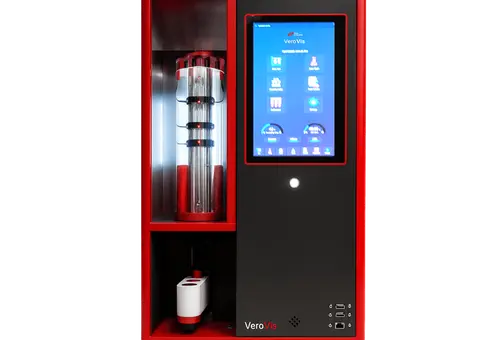
| Recommended equipment | VeroVis — Automatic Kinematic Viscometer |
Related Products
Recommended equipment for the D445 measurements behind ASTM D2270:
Choosing the right equipment for ASTM D2270
A viscosity index is only as good as the two kinematic viscosity values behind it. Laboratories that report D2270 need a viscometer that holds temperature and timing tightly at both 40 °C and 100 °C.
VeroVis is the Vero Scientific instrument for those D445 runs. Use it when you need the viscosities; use D2270 when you need the index calculated from them.
Frequently Asked Questions
What does ASTM D2270 measure?
ASTM D2270 is a calculation practice. It turns kinematic viscosities measured at 40 °C and 100 °C — usually by ASTM D445 — into a viscosity index. It is not a second viscometer method.
What is viscosity index?
Viscosity index describes how much a petroleum product’s kinematic viscosity changes between 40 °C and 100 °C. A higher index means the oil thins less as it heats.
Is ASTM D2270 a substitute for ASTM D445?
No. D2270 does not replace D445. You still run two kinematic viscosity tests, then apply the D2270 calculation. ASTM D445 is the bench method.
Does Vero Scientific support ASTM D2270?
Yes. VeroVis measures kinematic viscosity at the two temperatures D2270 requires. The index is calculated from those results.
How does ASTM D2270 relate to ASTM D7042?
D7042 is a different viscometer principle. D2270 still needs kinematic viscosity at 40 °C and 100 °C. If those values come from D7042, they are not D445 results — treat the source method as part of the record.
Get actionable insights and advanced solutions tailored to your industry's needs and technical challenges.
*Submit your email to receive the latest updates and insights from Vero Scientific.