
Oxidation Stability Analyzer
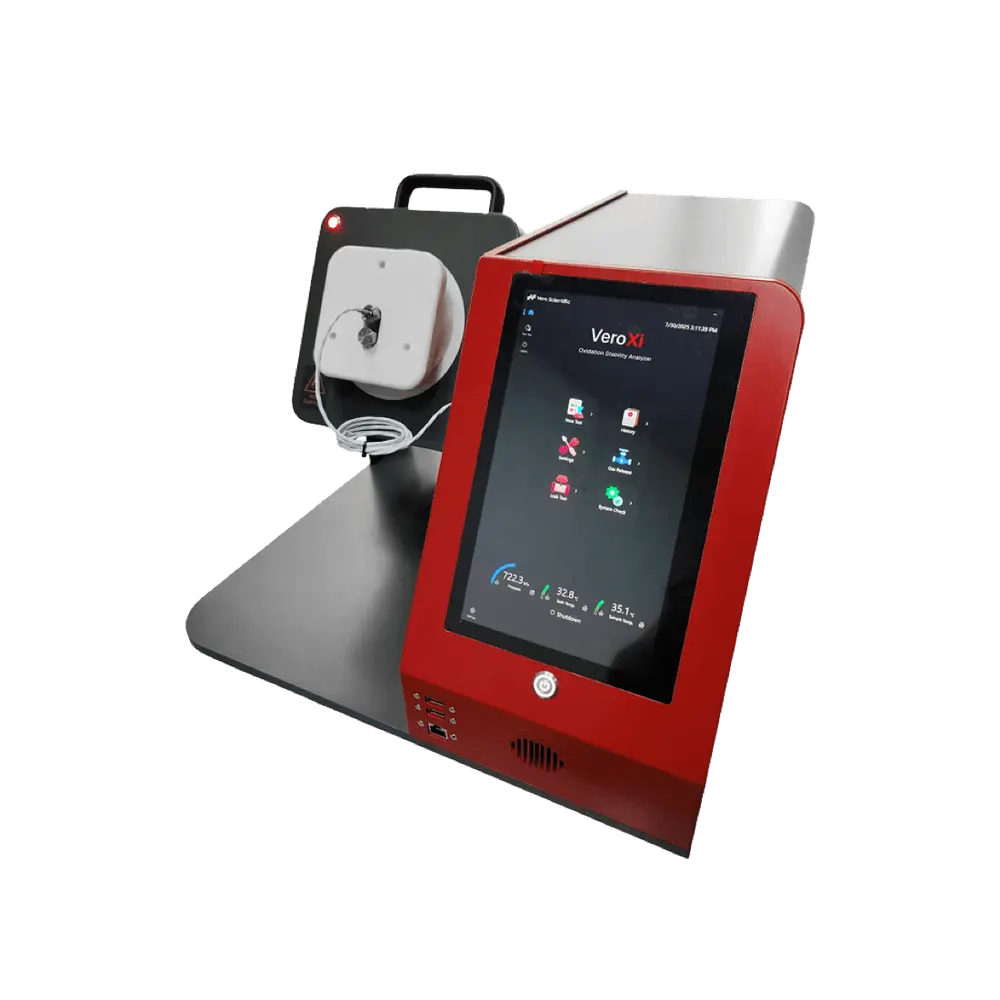
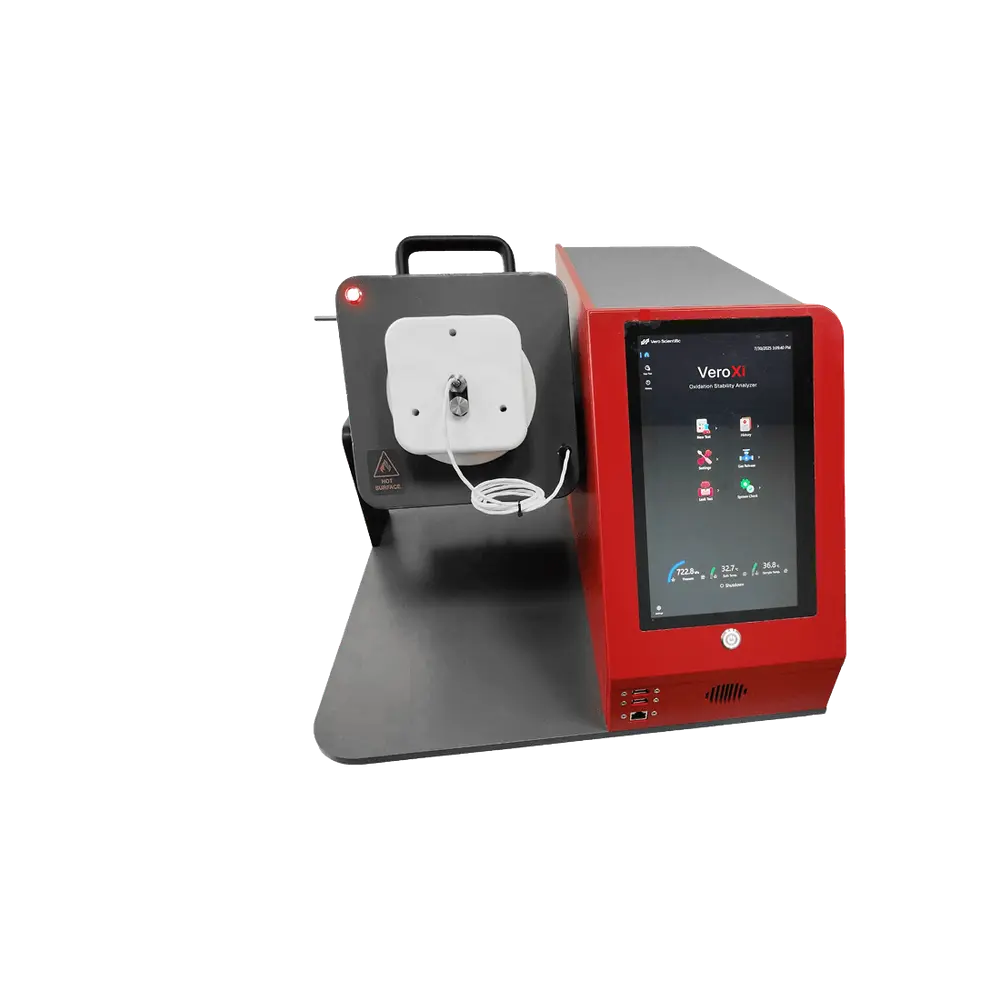
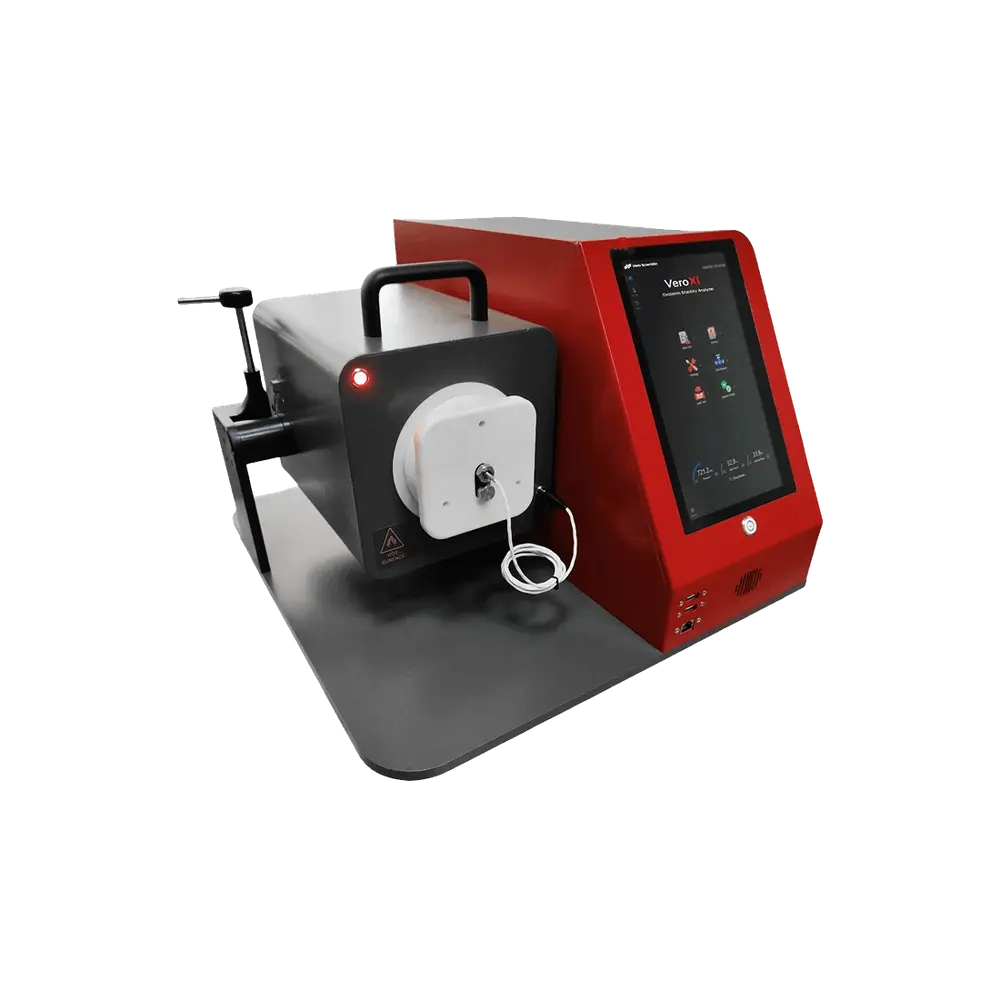
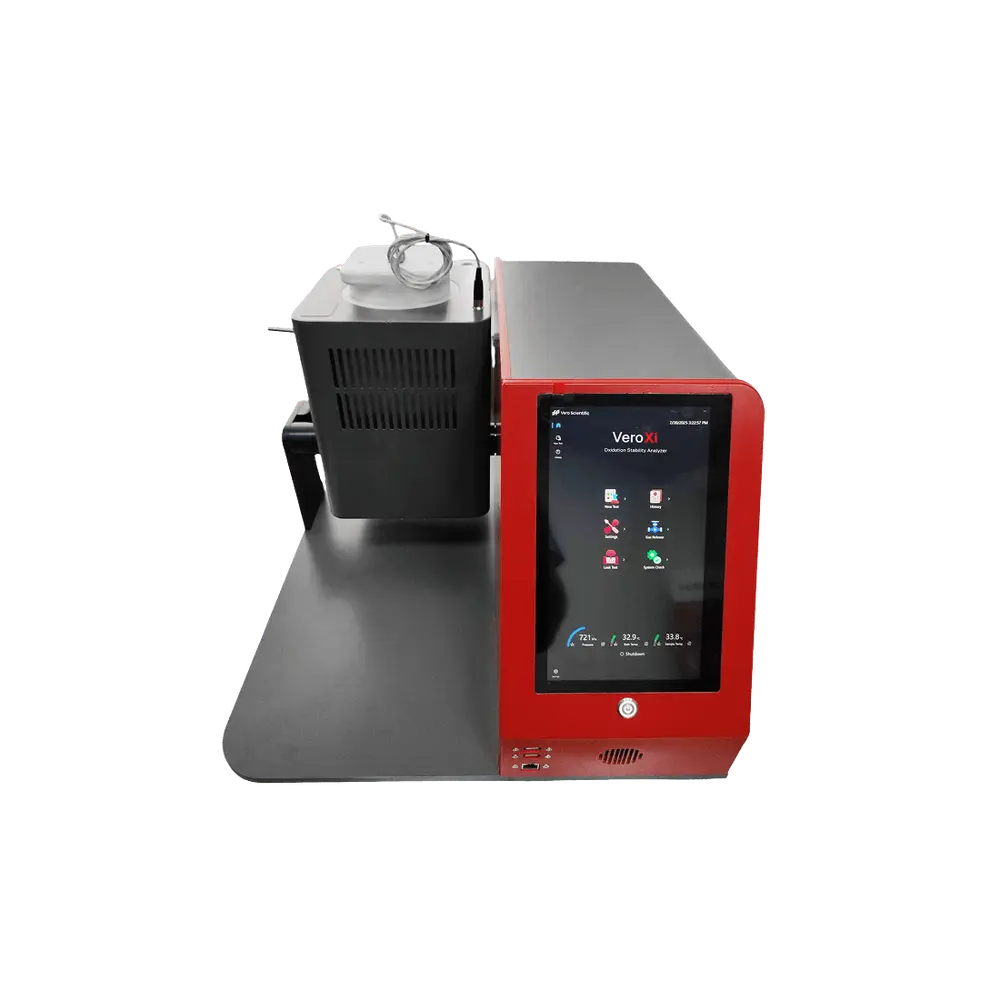
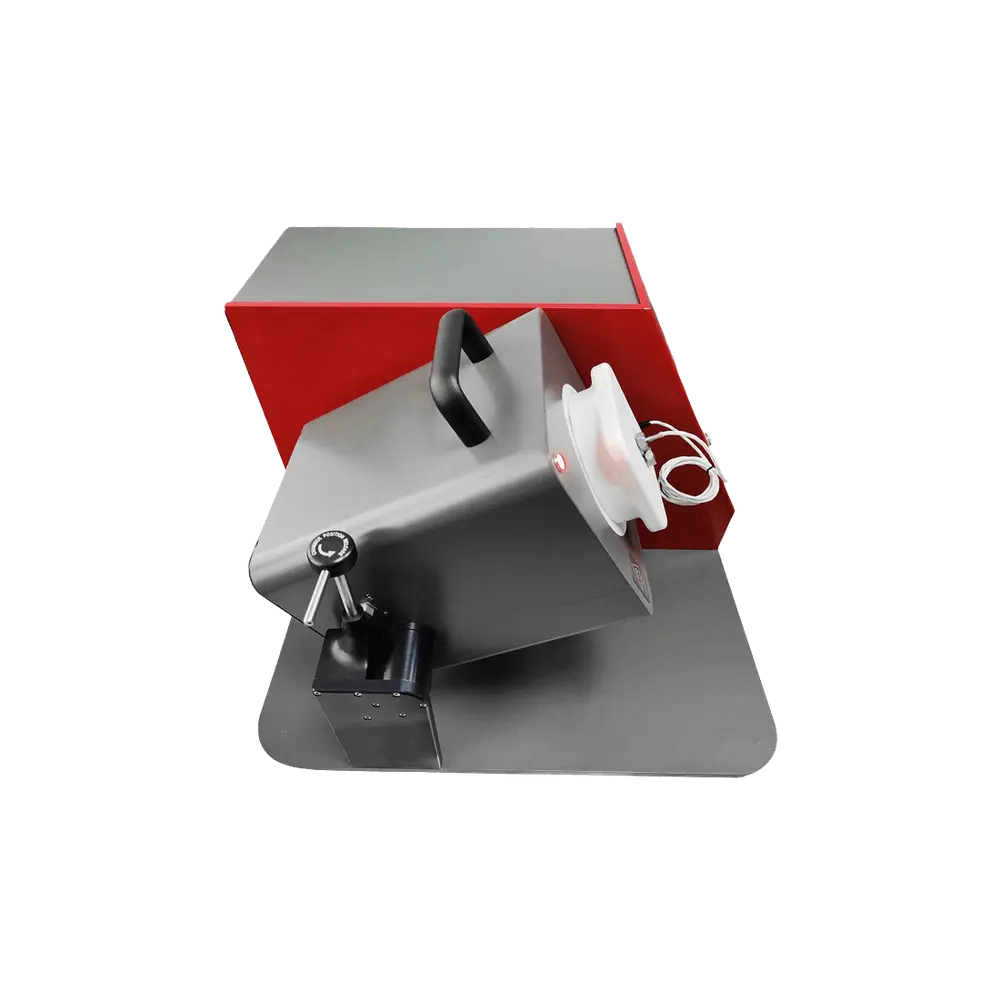
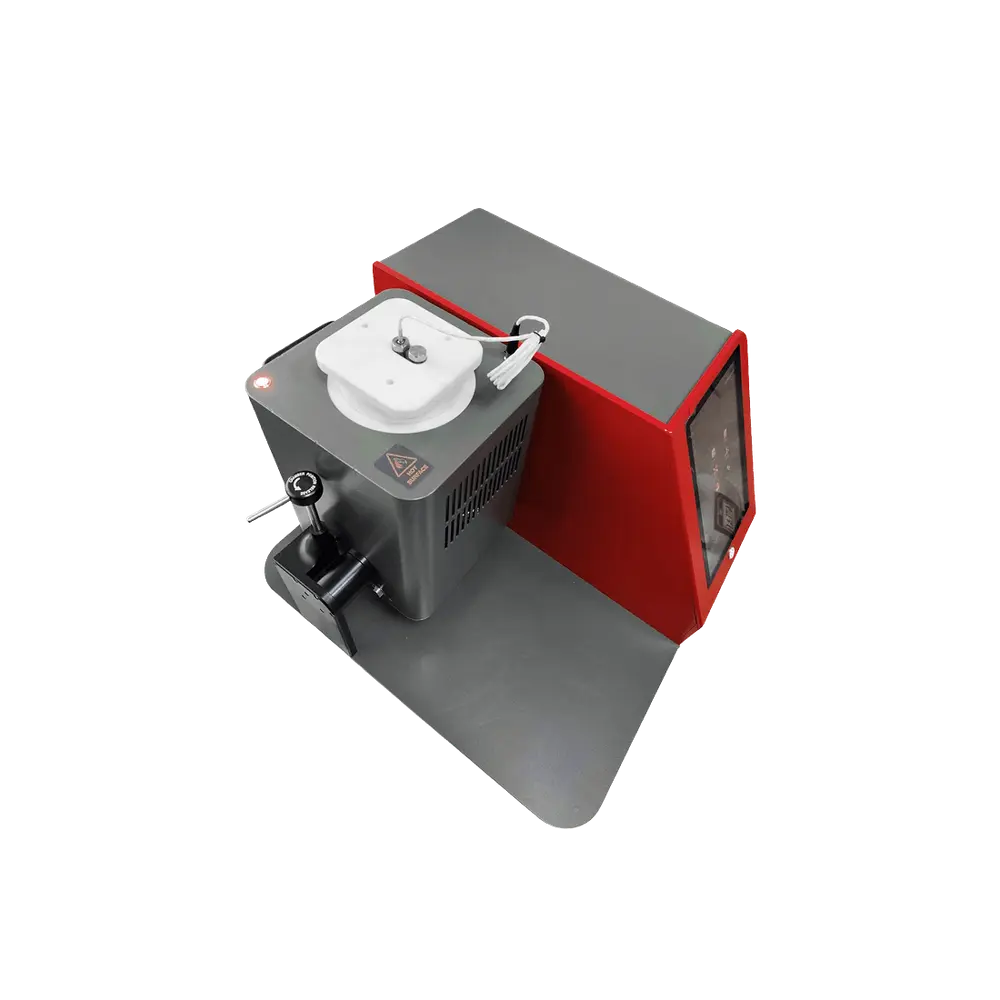
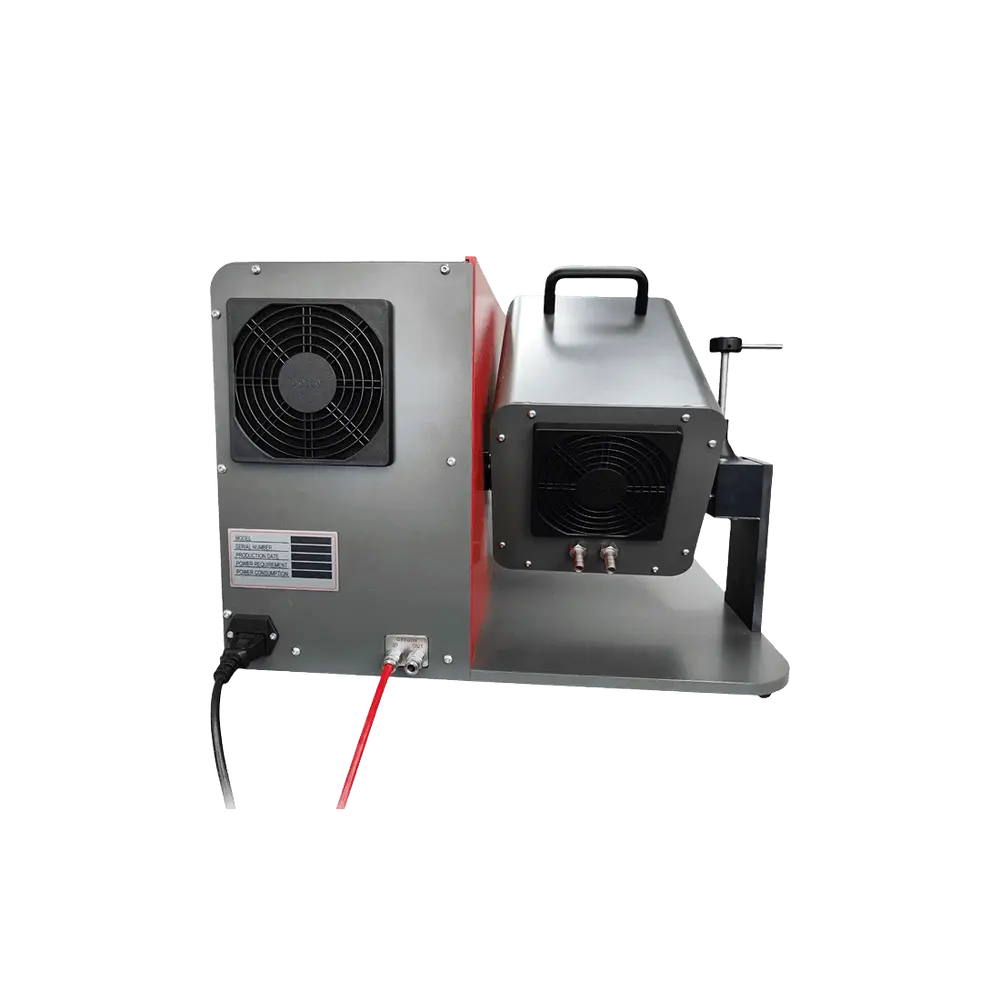
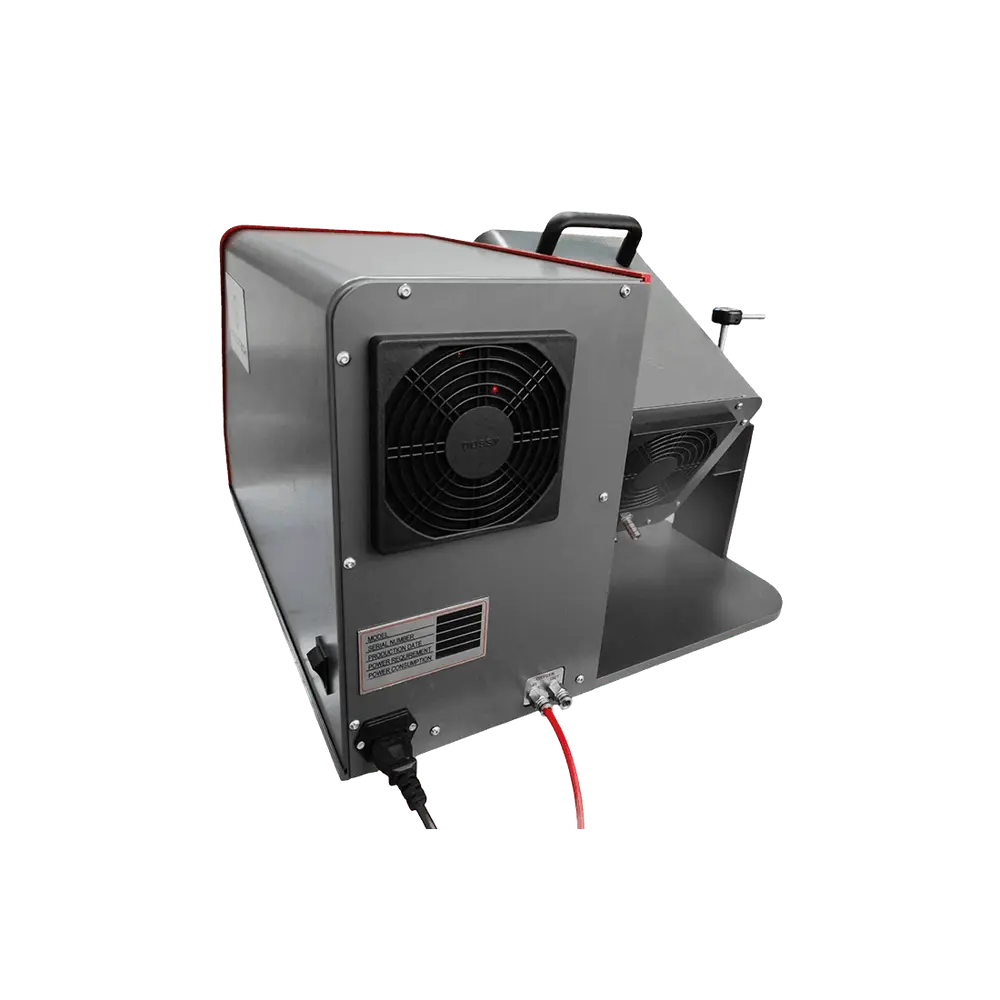
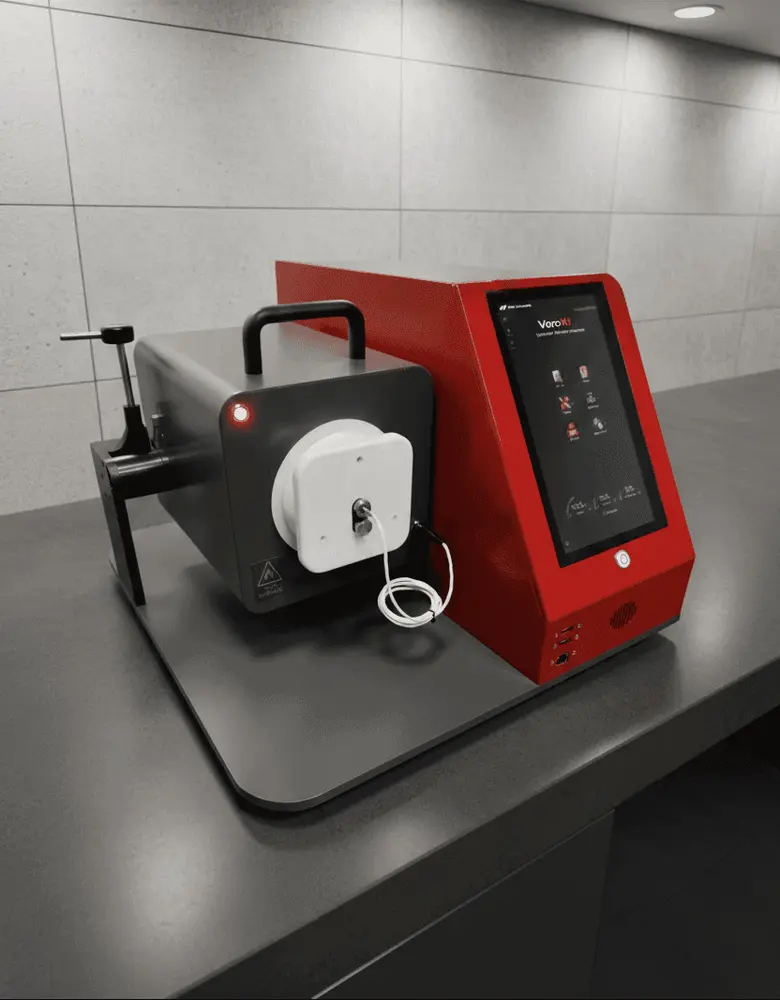
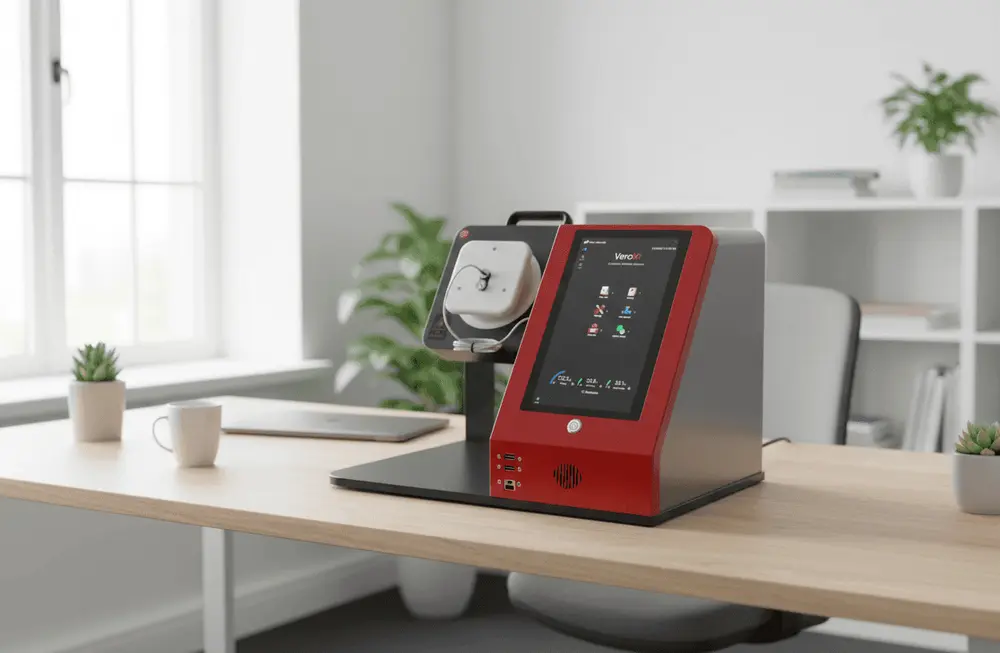
The VeroXi Oxidation Stability Analyzer is designed for accurate evaluation of oxidation stability in oils, fuels, and lubricants. Built for laboratory environments, it provides reliable and repeatable results while supporting standardized oxidation stability testing procedures.
Results land in VeroOCM, the on-site oil analysis platform.
Standards
- ASTM D2272
- ISO 7536
- DIN 51554
Designed for reliable laboratory analysis, the VeroXi oxidation stability tester supports ASTM D2272, ISO 7536, and IP 40 testing standards. These standards ensure reliable and reproducible oxidation stability measurements for laboratories performing quality control and research in the automotive, oil, and energy industries.
Highlights
The VeroXi oxidation stability analyzer delivers accurate and repeatable results for testing the oxidation stability of oils, lubricants, and other fluid samples, making it an essential tool for laboratory quality control and research applications.
Our oxidation stability tester is designed with an intuitive interface and simplified testing workflow to improve laboratory efficiency during sample preparation and analysis. Customizable test methods, precise temperature and pressure control, and automated gas release functions ensure reliable testing conditions. Our oxidation stability analyzer can store up to 10,000 test results, enabling laboratories to review historical data and compare oxidation stability performance over time. Its design incorporates a copper coil for effective mixing, a stable oxygen supply system, and a guided testing procedure that simplifies operation from sample preparation to result storage.
Features
Efficient Operation and Sample Preparation
Our oxidation stability tester is designed to simplify sample preparation and testing workflows while ensuring consistent operating conditions for accurate laboratory results.
- Detailed Sample Preparation: This feature demonstrates the precise sample preparation process, including the step-by-step addition of oil and distilled water, weighing the sample accurately, and ensuring proper placement of the copper coil. These steps are critical for ensuring the reliability and accuracy of the oxidation stability test results.
- Oxygen Supply and Pressure Settings: Learn how to connect the oxygen hose to the device and adjust the gas inlet pressure to 7 bar. This ensures that the device operates within the optimal conditions for accurate testing, maintaining a consistent and controlled environment for every test.
- Efficient Device Bath Setup: The video covers the process of adding distilled water to the device bath to ensure proper thermal contact and securely closing the bath cover. This step is crucial for maintaining stable test conditions throughout the process.
- Test Start Procedure: Walk through the steps for starting a new test, including entering operator details, selecting the appropriate ASTM method, and initiating the test. This ensures that the testing process is simple and efficient, with standardized procedures for consistent results every time.
Calibration, Maintenance, and Gas Control
- Calibration of Temperature and Pressure: This feature explains how to perform precise calibration of the temperature and pressure settings on the VeroXi. By inputting values from certified sensors, users can ensure that the device provides highly accurate measurements, making the results more reliable for long-term testing.
- Leak Test Procedure: Learn how to perform a leak test, which is essential for checking the integrity of the device and ensuring there are no gas leaks during testing. This step helps maintain the safety and performance of the VeroXi.
- System Check for Device Maintenance: Discover how to use the system check feature to perform routine maintenance, including checking the functionality of the mixer, heater, and oxygen flow. This ensures that all components are working properly and ready for the next test.
- Gas Release Function for Post-Test Safety: The video also covers how to use the gas release function after completing a test. This step ensures that any remaining gas is safely removed, which is critical for maintaining the safety of both the operator and the device.
- History and Test Results Management: Explore the VeroXi's capability to store up to 10,000 test results. Learn how to access past results and use the history function to review, analyze, and compare test data, making it easier to track trends and maintain consistency in testing.
The VeroXi is a reliable oxidation stability analyzer for laboratories performing petroleum and lubricant testing.
Technical Specifications
| Model | VeroXi - Oxidation Stability Analyzer |
|---|---|
| Standards Compliance | ASTM D2272, ISO 7536, DIN 51554 |
| Sample Volume | 50 grams of oil, 5 grams of distilled water |
| Gas Supply | Oxygen, pressure adjustable to 7 bar ± 0.2 bar |
| Device Capacity | Up to 10,000 test results stored |
| Operating Temperature | 0°C to 50°C |
| Power Supply | 1200W minimum, stable power connection required |
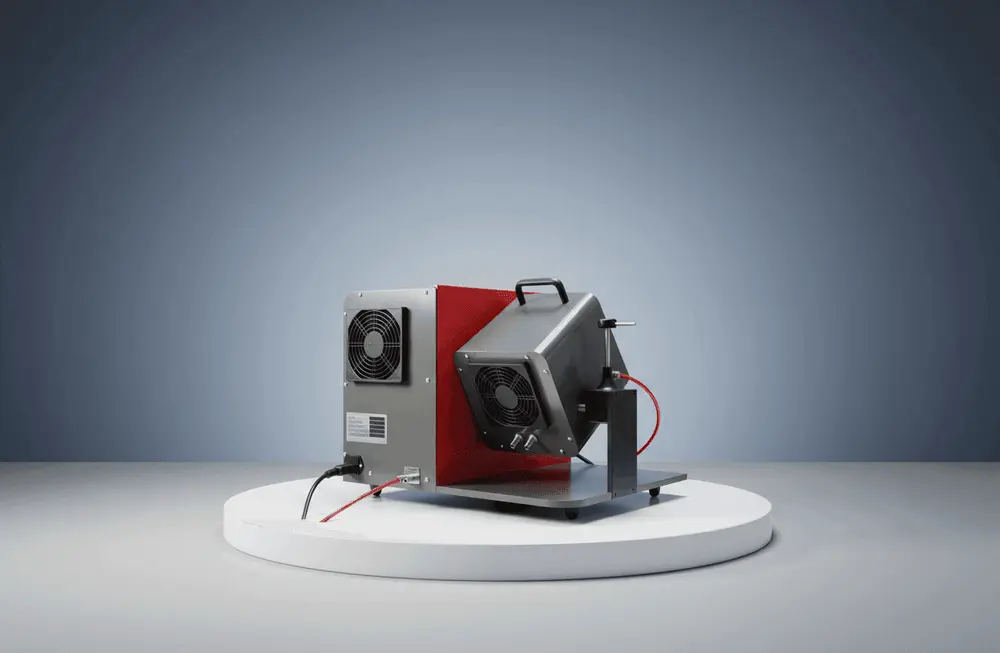
| Dimensions | W: 40cm D: 50cm H: 60cm |
| Weight | 25 kg |
| Display | 7-inch touch screen interface |
| Accessories Included | Sample temperature probe (1 pcs), sample glass container (2 pcs), oxygen hose (6 m), copper coil (5 pcs), etc. |
| Safety Features | Leak test, system check, and gas release functions |
Resources
Frequently Asked Questions
Which testing standards does your oxidation stability analyzer support?
Our oxidation stability analyzer is designed to comply with internationally recognized standards, including ASTM D2272, ISO 7536, and IP 40. This allows laboratories to generate reliable, reproducible results that meet industry requirements for both quality control and research applications.
How does VeroXi maintain consistent testing conditions?
The VeroXi uses precise temperature control and a stable oxygen pressure system to ensure consistent conditions throughout each test. With adjustable pressure up to 7 bar and controlled thermal environments, it minimizes variability and delivers highly repeatable oxidation stability results.
What is RPVOT (Rotating Pressure Vessel Oxidation Test) and how does it relate to ASTM D2272?
RPVOT (Rotating Pressure Vessel Oxidation Test) is the industry term for the oxidation stability method defined in ASTM D2272. It measures how long a lubricant, typically a turbine or hydraulic oil, resists oxidation under elevated oxygen pressure, heat, water, and a copper catalyst coil. VeroXi performs this test according to ASTM D2272, ISO 7536, and related standards.
How does VeroXi support data tracking and long-term analysis?
The VeroXi can store up to 10,000 test results, allowing laboratories to review historical data, compare oxidation performance over time, and support trend analysis. This is especially valuable for monitoring product stability and improving quality control processes.
What safety features are included in your oxidation stability analyzer?
We integrate multiple safety functions, including leak testing, system checks, and an automated gas release system. These features ensure safe handling of oxygen pressure and help protect both the operator and the equipment during high-pressure testing.
Why is a copper coil used in oxidation stability testing?
The copper coil acts as a catalyst that accelerates oxidation, simulating the effect of metal components found in real lubrication and hydraulic systems. This allows the test to more accurately predict how an oil will degrade under actual operating conditions.
What sample volume is required for ASTM D2272 oxidation stability testing?
ASTM D2272 testing typically requires 50 grams of oil and 5 grams of distilled water per sample, along with a copper catalyst coil and oxygen supplied at approximately 7 bar pressure - the exact configuration used by VeroXi.
What is the difference between RPVOT and TOST oxidation stability tests?
RPVOT (ASTM D2272) measures oxidation stability under oxygen pressure in a sealed rotating vessel and is typically completed within a few hours, making it a fast screening test. TOST (ASTM D943, Turbine Oil Stability Test) exposes oil to oxygen, water, and a copper catalyst at atmospheric pressure over thousands of hours, better reflecting long-term in-service aging. VeroXi is designed for RPVOT-type testing under ASTM D2272.