
Carbon Residue Analyzer
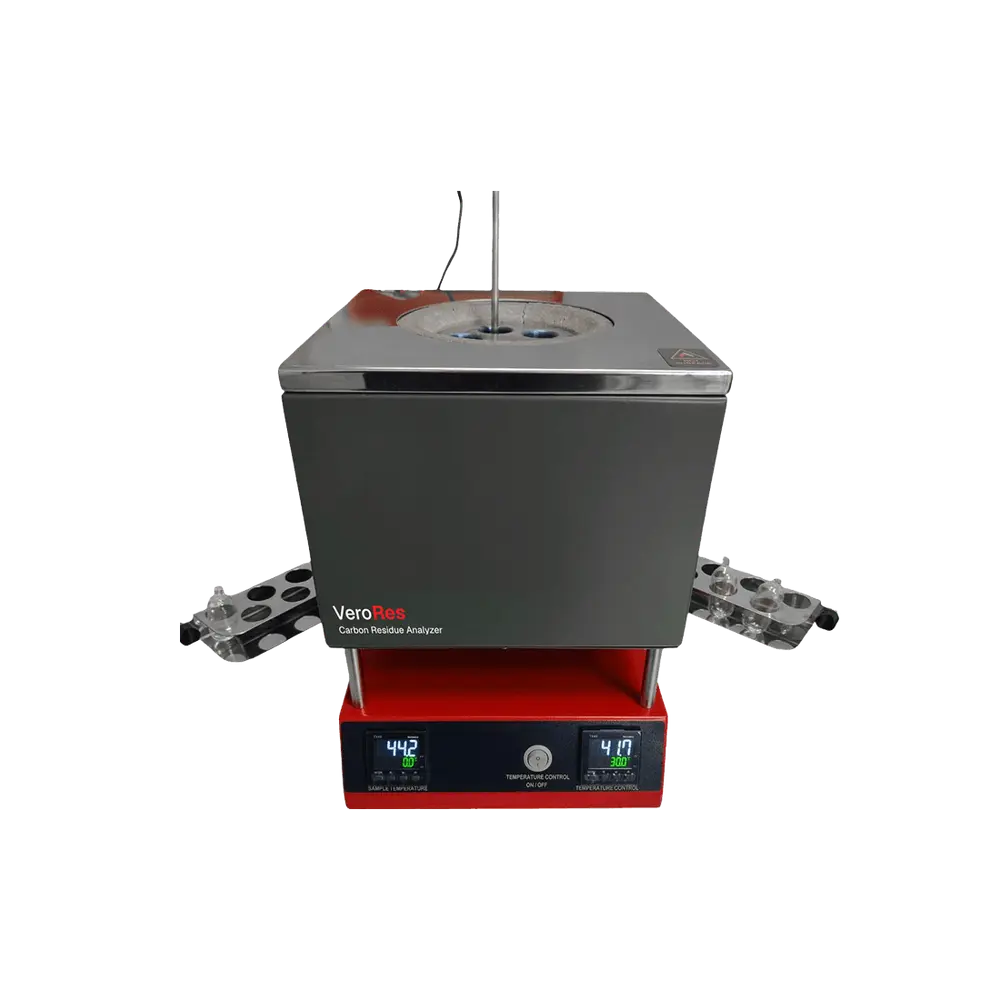
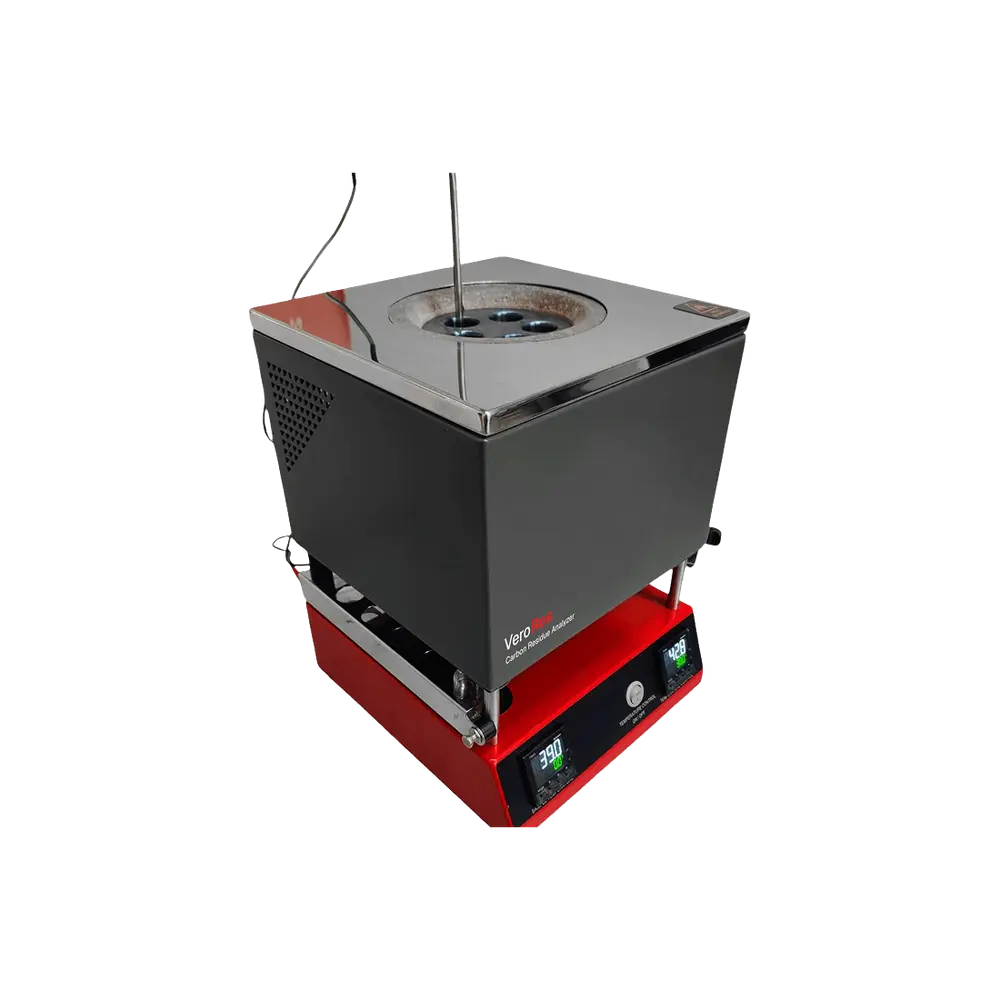
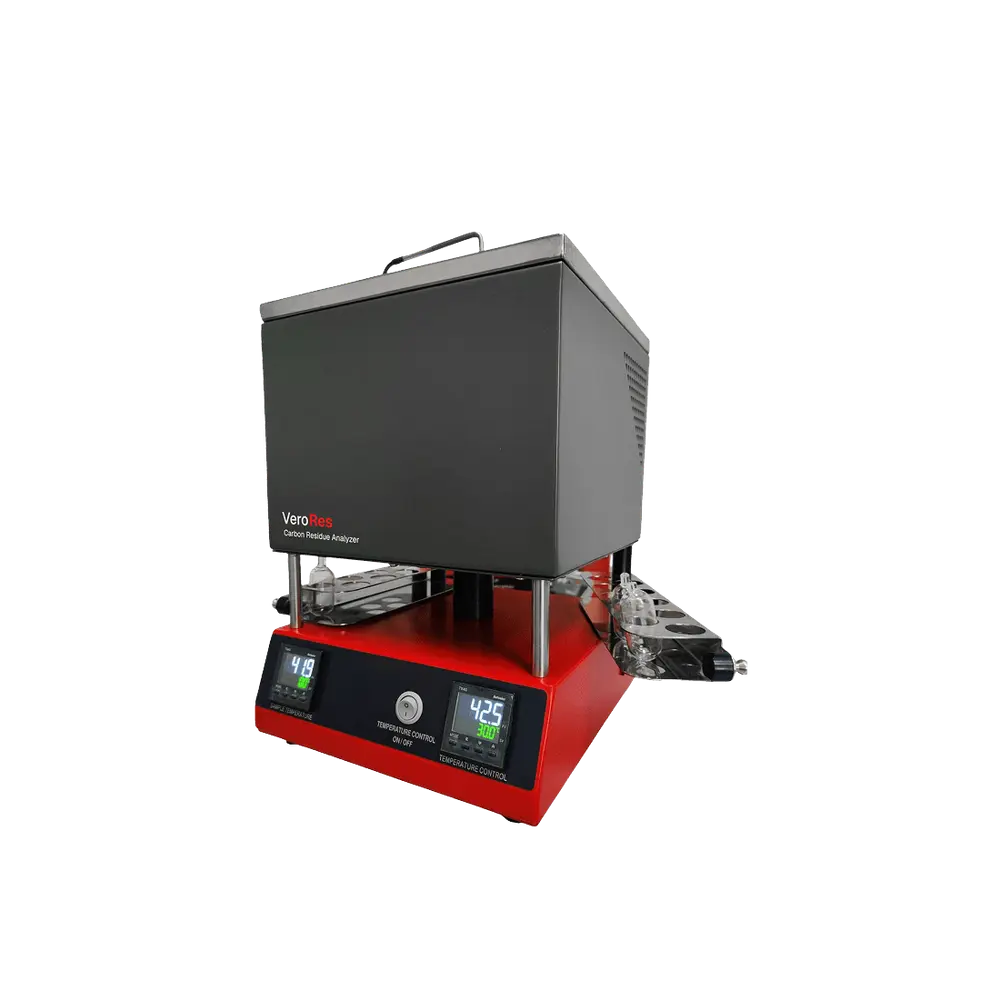
The VeroRes is a compact carbon residue test apparatus designed for fast, safe, and precise Ramsbottom carbon residue determination. With a dry-bath furnace, no nitrogen requirement, and a rapid 20-minute heat-up, it delivers accurate results and improved laboratory efficiency in compliance with ASTM D524, ISO 4262, and IP 14.
Results land in VeroOCM, the on-site oil analysis platform.
Standards
- ASTM D524
- ASTM D6074
- IP 14
- ISO 4262
- FTM 791-5002
- NF T 60-117
The VeroRes carbon residue test apparatus, widely used as a residual carbon analyzer, is engineered to provide accurate and repeatable carbon residue testing for petroleum products, fuels, and lubricants. Its compact dry-bath furnace eliminates messy oil baths and removes the need for external nitrogen. With ±1 °C temperature stability, capacity for five samples, and rapid heating to 550 °C in approximately 20 minutes, the instrument supports reliable and efficient carbon residue analysis in laboratories, refineries, and research facilities.
Highlights
The VeroRes carbon residue test apparatus is designed to deliver fast, accurate, and repeatable results, making it an essential laboratory tool for determining Ramsbottom carbon residue in fuels, lubricants, crude fractions, and heavy oils. By heating samples to 550–650 °C under controlled conditions, the system provides reliable insights into deposit formation, fuel quality, and refining performance.
Using advanced dry-bath furnace technology, the device eliminates oil baths and nitrogen supply requirements, ensuring safe and clean operation. The system supports simultaneous testing of up to five samples while maintaining ±1 °C temperature stability, improving laboratory productivity. Rapid heat-up cycles and minimal maintenance requirements make VeroRes a reliable solution for refineries, research laboratories, and industrial testing facilities operating according to ASTM D524, ISO 4262, and IP 14.
Features
Carbon Residue Testing for Fuels and Lubricants
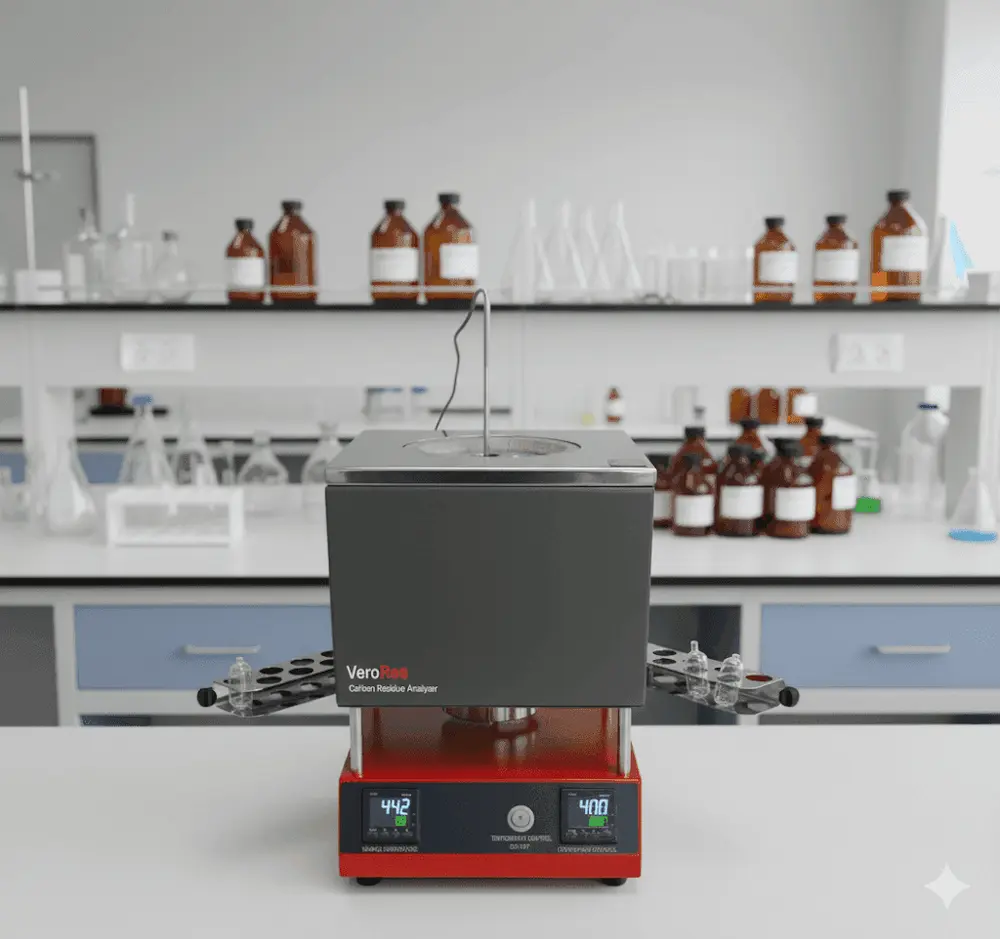
Our carbon residue test apparatus is engineered to deliver accurate, repeatable Ramsbottom carbon residue measurements while simplifying routine laboratory testing.
- Standard Methodology: Learn how VeroRes follows ASTM D524 and ISO 4262 for accurate determination of Ramsbottom carbon residue.
- Step-by-Step Demonstration: See the entire process, from preparing glass coking bulbs to precise heating in the dry-bath furnace.
- Application Benefits: Understand how VeroRes supports refineries, research centers, and quality control labs with reliable test data.
- Clean & Safe Operation: Discover how the nitrogen-free, oil-free furnace ensures safer, more efficient laboratory work.
Laboratory Efficiency and Performance
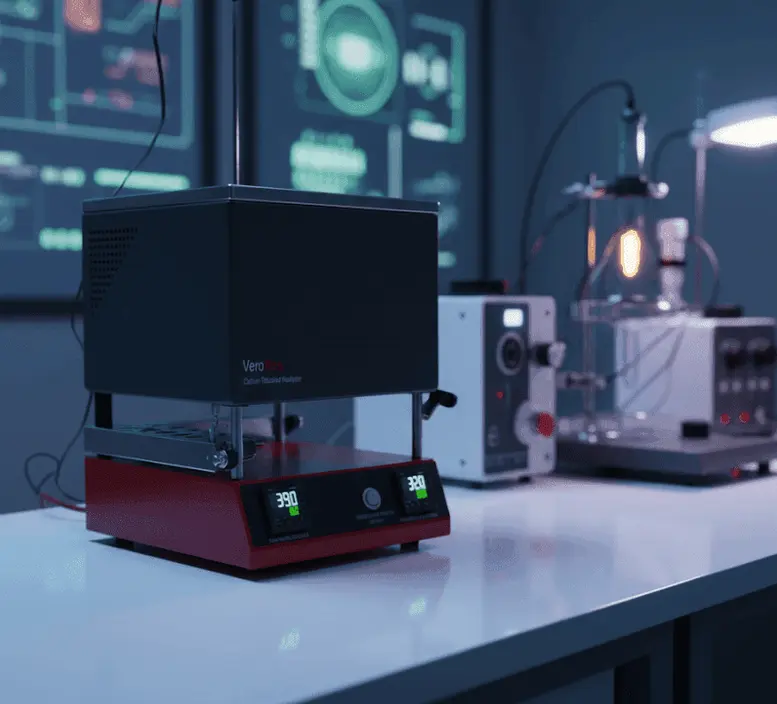
The VeroRes carbon residue test apparatus is designed to improve laboratory productivity through faster testing, simplified operation, and consistent analytical performance.
- Rapid Heat-Up: VeroRes quickly reaches the standard test temperature of 550 °C in only ~20 minutes, making it nearly three times faster than conventional oil-bath systems. This speed allows laboratories to shorten preparation times and conduct more tests within a single working day.
- Multi-Sample Testing: With the ability to process up to five glass coking bulbs simultaneously, the analyzer significantly increases throughput while ensuring every sample is exposed to the same controlled heating environment for accurate comparisons.
- Precise Control: Its advanced microprocessor ensures ±1 °C temperature stability, guaranteeing consistent and repeatable results even across extended testing schedules. This level of precision is essential for critical applications such as refinery feedstock evaluation and fuel quality monitoring.
- Cost Savings: Thanks to its dry-bath furnace design, VeroRes requires no nitrogen supply and eliminates oil bath maintenance, reducing ongoing operational costs. Compared to a cheap residual carbon analyzer, it delivers greater reliability, lower maintenance, and long-term value for laboratory testing. The only consumables are inexpensive glass bulbs, making the system both economical and sustainable for continuous use.
Technical Specifications
| Model | VeroRes – Carbon Residue Test Apparatus |
|---|---|
| Standards Compliance | ASTM D524, ASTM D6074, IP 14, ISO 4262, FTM 791-5002, NF T 60-117 |
| Furnace Type | Cast-iron block, microprocessor-controlled with digital setpoint & display |
| Capacity | 5 coking bulbs (simultaneous testing) |
| Maximum Temperature | 650 °C (standard test temperature 550 °C) |
| Controller Sensitivity | ±1 °C for high stability measurements |
| Heating System | 0–2400 W ceramic band heater, rapid heat-up (~20 minutes to 550 °C) |
| Over-temperature Protection | Automatic cut-off safety circuit |
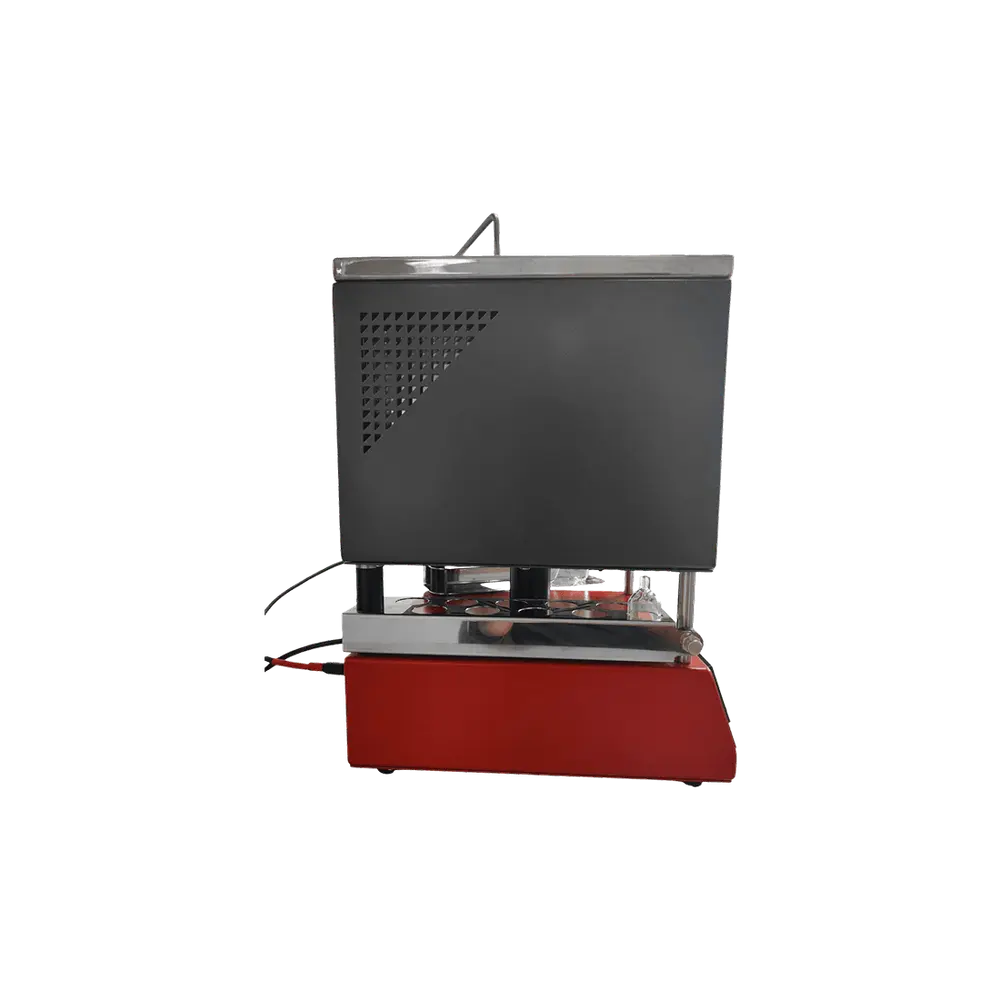
| Construction | Stainless steel + insulated design to prevent heat transfer to body (keeps outer surfaces safe to touch) |
| Sample Range | Residual carbon determination via evaporation & pyrolysis – suitable for petroleum products, lubricants, asphalts, and heavy oils |
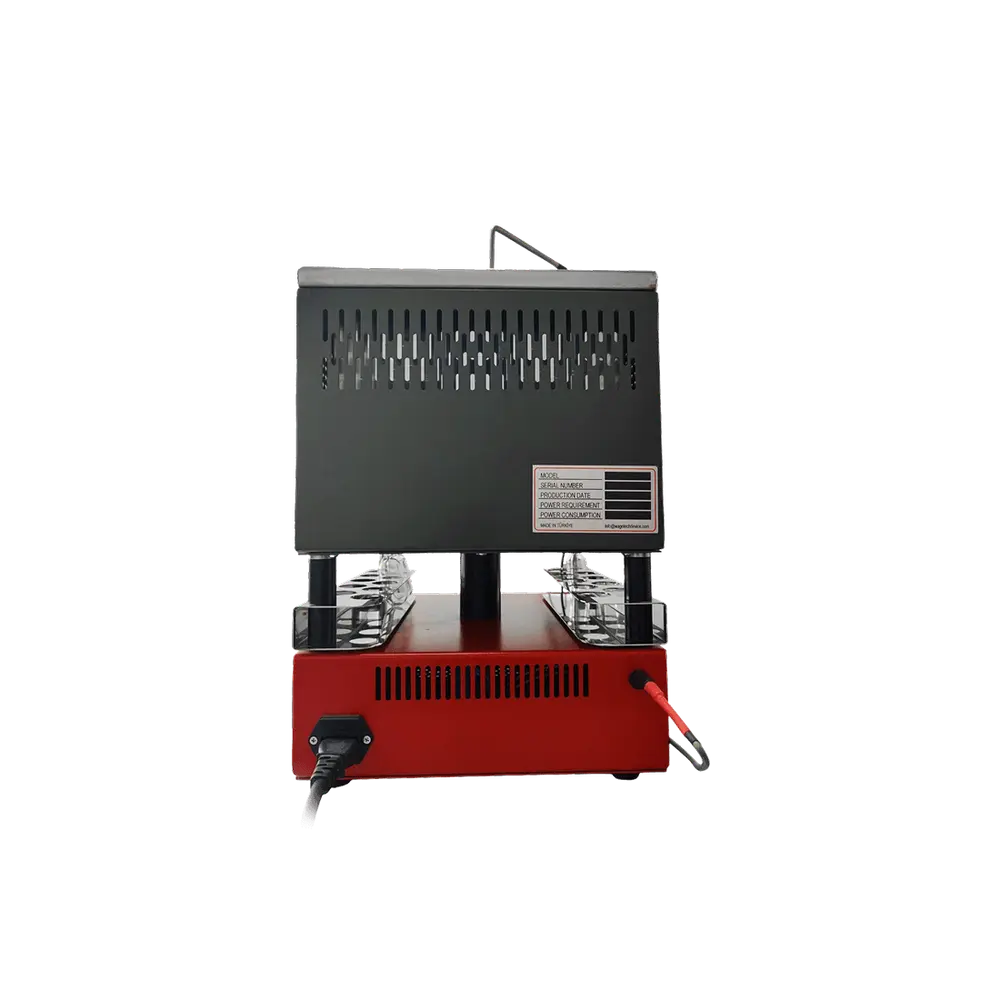
| Power Supply | 220 V / 50–60 Hz |
| Maintenance | No oil bath, no nitrogen required; minimal servicing – only consumables are inexpensive glass coking bulbs |
Resources
Frequently Asked Questions
How does VeroRes improve testing efficiency?
Our carbon residue test apparatus uses a dry-bath furnace design that eliminates the need for oil baths and external nitrogen systems. This simplifies setup, reduces maintenance, and allows laboratories to perform tests faster and more efficiently compared to traditional Ramsbottom carbon residue methods.
What is the difference between Ramsbottom and Conradson carbon residue testing?
Ramsbottom carbon residue (ASTM D524) and Conradson carbon residue (ASTM D189) both estimate the carbonaceous residue remaining after evaporation and pyrolysis of a petroleum sample, but use different apparatus and heating methods. The Ramsbottom method, performed by VeroRes, uses a glass coking bulb heated in a furnace and is generally faster and requires a smaller sample than the Conradson method.
How does the VeroRes analyzer ensure accurate Ramsbottom carbon residue results?
We designed the VeroRes to maintain ±1°C temperature stability and controlled heating up to standard test conditions. This precise thermal control ensures consistent evaporation and pyrolysis, which are critical for obtaining reliable and repeatable Ramsbottom carbon residue measurements.
What types of samples can be tested with your carbon residue analyzer?
The VeroRes is suitable for a wide range of petroleum-based samples, including fuels, lubricants, crude fractions, heavy oils, and asphalt materials. It enables laboratories to evaluate deposit-forming tendencies and overall product quality across different applications.
How does your equipment support multi-sample testing in laboratories?
Our analyzer allows simultaneous testing of up to five samples using glass coking bulbs. This multi-sample capability increases laboratory throughput while ensuring that each sample is exposed to identical controlled conditions for accurate comparison.
What are the advantages of using a dry-bath furnace for carbon residue testing?
By eliminating oil baths and nitrogen supply, the VeroRes provides a cleaner and safer testing environment. It reduces operational complexity, minimizes consumables, and lowers long-term costs while maintaining high accuracy in carbon residue analysis.
How fast can your carbon residue analyzer reach test temperature?
The VeroRes reaches approximately 550°C in about 20 minutes, significantly reducing preparation time compared to conventional systems. This rapid heat-up capability helps laboratories increase productivity and complete more tests within a single working day.
Is VeroRes a reliable residual carbon analyzer for petroleum labs?
Yes. VeroRes functions as a precise residual carbon analyzer, using dry-bath furnace technology to deliver ASTM D524 and ISO 4262 compliant Ramsbottom carbon residue results without nitrogen or oil-bath maintenance.
What is the difference between Ramsbottom and micro carbon residue (MCRT) testing?
Ramsbottom carbon residue (ASTM D524) uses a glass coking bulb heated in a furnace, while micro carbon residue (ASTM D4530) uses a much smaller sample and different apparatus, often correlating more closely with Conradson results. VeroRes performs Ramsbottom testing according to ASTM D524 and ISO 4262.
What does carbon residue indicate about fuel and lubricant quality?
Carbon residue indicates a fuel or lubricant's tendency to form carbonaceous deposits during combustion or high-temperature use. Higher carbon residue values generally signal a greater risk of deposit buildup, incomplete combustion, and reduced equipment performance, making it a key quality control parameter for refineries and testing laboratories.