
Solutions
Advanced Oil Viscosity Testing Solutions for Laboratories
Kinematic viscosity sits at the center of petroleum and lubricant quality assessment. It reflects how a fluid behaves under gravity-driven flow, and that behavior has direct consequences for lubrication film formation, equipment wear rates, energy efficiency, and fluid performance across the service temperature range. A lubricant that measures outside its viscosity grade specification creates downstream problems that extend well beyond the laboratory.
Vero Scientific builds viscosity testing instrumentation for facilities that treat measurement integrity as a core operational requirement. Our equipment is used in petroleum refineries, lubricant manufacturing plants, independent analytical laboratories, and quality control departments where testing volume is high, procedural discipline is expected, and the data produced must withstand technical scrutiny.
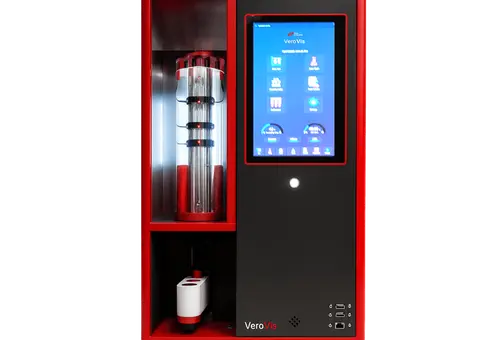
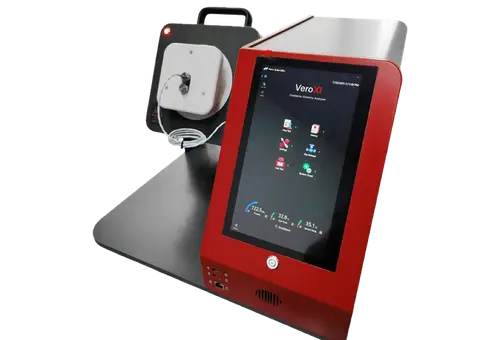
Improve Testing Accuracy and Laboratory Efficiency
Getting viscosity right means controlling every variable that influences the measurement. Oil bath thermal uniformity, solvent quality and delivery, meniscus detection timing, and sample preparation each contribute to the spread of results a laboratory sees over time. When these factors are left to manual judgment, inter-operator variability compounds and result reproducibility suffers.
Vero Scientific viscosity testing systems address each of these variables through precise thermal management, automated tube cleaning, high-resolution flow timing, and structured testing workflows. The result is a reduction in operator-dependent variability and greater confidence in reported data, whether the laboratory is running ASTM D445 on turbine oils, evaluating finished engine oils for viscosity index, or screening hydraulic fluids against OEM release criteria.
Frequently Asked Questions
How does your oil viscosity testing equipment improve laboratory efficiency?
Automated temperature control, sample handling, flow-time measurement, and solvent washing reduce the manual steps between tests. Laboratories can increase daily sample throughput without adding operator hours or compromising result quality.
Which viscosity testing standards does your equipment support?
The VeroVis automatic kinematic viscometer is designed to support widely used standards including ASTM D445, ASTM D446, ISO 3104, ISO 3105, and related petroleum viscosity testing methods.
Can your viscosity testing equipment handle different oil sample types?
Yes. The VeroVis is suitable for a broad range of petroleum-based fluids: lubricating oils, base stocks, hydraulic fluids, industrial gear oils, marine fuels, and other Newtonian liquids that fall within its measurement range of 1 mm²/s to 10,000 mm²/s (cSt).
How does temperature stability affect viscosity testing accuracy?
Kinematic viscosity is highly temperature-dependent. For most lubricating oils, even a 0.1°C deviation at the test temperature can introduce measurable error. The VeroVis maintains bath temperature with a resolution of 0.01°C, providing the thermal stability required for standards-compliant results.
How does your equipment simplify routine viscosity testing?
Touchscreen-guided test setup, automatic sample volume selection, integrated wash and dry cycles, and automated flow-time calculation reduce the steps an operator must perform between samples. This lowers the training burden and minimizes procedural variation across shifts.
Can your systems support long-term laboratory data management?
Yes. Our solutions support historical result storage, method management, and efficient test data organization to help laboratories maintain traceable and consistent testing records.
Get actionable insights and advanced solutions tailored to your industry's needs and technical challenges.
*Submit your email to receive the latest updates and insights from Vero Scientific.