Lubricant degradation happens gradually and oxidation is the primary driver. When oil is exposed to oxygen at elevated temperatures, it undergoes a chain reaction of chemical degradation. The rate depends on temperature, the presence of metal catalysts (copper and iron are particularly active), water contamination, and the quality of the base stock and additive package.
The byproducts of this process are what cause real-world problems:
- Sludge and varnish deposits accumulate on internal surfaces, restricting oil flow and causing heat buildup
- Acid formation increases the oil's total acid number (TAN), accelerating corrosion of metal components
- Viscosity increase reduces the oil's ability to circulate properly under load
- Additive depletion leaves the oil without the protective chemistry it relies on
Viscosity may remain within specification even as oxidation has significantly depleted the antioxidant package. By the time conventional parameters flag a problem, oxidation has often been progressing for some time. This is why testing oxidation stability directly rather than inferring it from secondary indicators matters.
Which Products Require Oxidation Stability Testing
Oxidation stability is most critical for lubricants expected to remain in service for extended periods under thermal and oxidative stress. The primary product categories include:
Turbine oils
Steam, gas, and hydro turbines operate with large oil volumes and low makeup rates. Once oxidation accelerates, the cost of an oil change in a 10,000+ gallon reservoir is substantial. More importantly, varnish deposits in turbine control systems can cause valve stiction and loss of control response.
Compressor oils
Particularly in rotary screw and reciprocating compressors, where hot discharge temperatures drive oxidation. Deposit formation in compressor systems creates fire and explosion risk in addition to mechanical wear.
Hydraulic fluids
High-pressure hydraulic systems are sensitive to viscosity changes and deposit formation. Servo valves and proportional valves have tight clearances that varnish can seize.
Circulating oils and gear oils
Industrial systems with long drain intervals depend on oxidation-stable base oils and additive packages to deliver their rated service life.
In each of these applications, oxidation stability testing provides the early warning that routine oil analysis parameters may not.
ASTM D2272: The Standard for Oxidation Stability Testing
ASTM D2272, formally known as the Rotating Pressure Vessel Oxidation Test (RPVOT), is the industry-standard method for evaluating the oxidation stability of turbine oils and related lubricants under accelerated conditions.
The test works by placing a measured oil sample in a sealed pressure vessel together with water and a copper catalyst coil. The vessel is pressurized with oxygen to approximately 90 psi and heated to 150°C. It then rotates in a constant-temperature bath to ensure uniform exposure throughout the test. As oxidation proceeds, oxygen is consumed and the internal pressure drops. The RPVOT result is reported as the time in minutes until a 25 psi pressure drop is recorded.
A longer time indicates better oxidation stability and, by extension, longer expected lubricant service life. Results from in-service oil samples are compared against the baseline RPVOT of the same new oil. When the result drops to 25% of the new oil baseline, this is typically treated as a caution threshold, though specific limits vary by application and OEM requirements.
ASTM D2272 is designed for oils with kinematic viscosities up to the range applicable to turbine and circulating oils. It's especially suited to situations where a large oil volume is involved, makeup fluid additions are minimal, and early detection of oxidative degradation has significant cost implications.
ASTM D2272 detects antioxidant depletion before other measurable properties change. An oil can still look acceptable in terms of viscosity and TAN while its remaining oxidation resistance has dropped substantially. RPVOT captures that depletion directly.
How RPVOT Fits Into a Condition Monitoring Program
For facilities running turbines, large compressors, or industrial circulating systems, RPVOT testing is typically scheduled annually or at fixed operating hour intervals as part of a broader oil analysis program.
The practical value breaks down into three areas:
- Predictive maintenance. Rather than changing oil on a fixed calendar schedule, RPVOT results allow maintenance teams to make data-driven decisions. If the oxidation stability of a turbine oil is still at 70% of its new-oil baseline after 18 months, a change may not yet be warranted. If it's at 30% after 12 months, that's actionable information.
- Formulation and procurement verification. New oil deliveries should be tested against specification before being introduced into service. RPVOT provides a direct check on whether the oil meets its declared oxidation stability performance and whether batch-to-batch consistency is being maintained by the supplier.
- Root cause analysis. When an oil degrades faster than expected, RPVOT results trended over time help isolate whether the issue is contamination, elevated operating temperatures, a change in base stock quality, or additive incompatibility from top-up with a different product.
For refineries and QC labs evaluating multiple products, RPVOT also enables comparative analysis ranking different candidate oils by their oxidation resistance before committing to a specification or supply contract.
Testing Equipment and Measurement Accuracy
Reliable oxidation stability results depend on consistent test execution. The key variables are temperature control, oxygen pressure regulation, and catalyst condition. Copper catalyst coils must be cleaned and conditioned between tests according to the standard's requirements. Catalyst surface condition has a measurable effect on results.
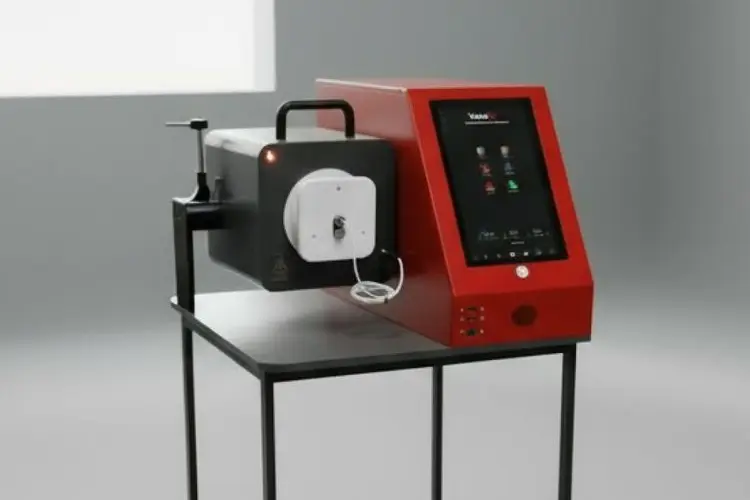
An oxidation stability analyzer designed for ASTM D2272 testing automates pressure monitoring, temperature control, and endpoint detection, reducing the operator-dependent variability that affects manual test setups.
For labs running RPVOT as a routine method, instrumentation that maintains consistent conditions across multiple test positions is particularly important so that the result is repeatable.
Water content in the test sample also matters. The standard specifies the amount of water added to the test vessel, but water already present in a used oil sample affects the test environment. Some labs report water content alongside RPVOT results to give full context to the data.
From Test Result to Decision
An RPVOT result by itself is a number. Its usefulness depends on context: the new-oil baseline, the service history, the application's operating conditions, and the trend over time.
For a steam turbine oil at 40% of its original RPVOT value after two years in service, the decision framework looks different than for a compressor oil at the same percentage after only six months.
Application severity, operating temperature, and the consequences of an in-service failure all factor into how aggressively a facility should act on a given result.
The standard caution limit of 25% remaining RPVOT is a conservative guideline. Some OEMs specify tighter limits. Some applications may tolerate continued service with enhanced monitoring.
Building Oxidation Stability Into Your QC Process
For QC facilities and laboratories testing petroleum products against specification, oxidation stability belongs in the core test slate. For maintenance and reliability teams, it's a direct input to oil change decisions and a safeguard against the deposit-related failures that are among the most disruptive and expensive in industrial operations.
Vero Scientific provides precision measurement and analysis technologies built for the demanding requirements of petroleum product testing. Contact us to learn how our solutions support ASTM D2272 testing and broader oil analysis programs across refineries, QC labs, and industrial facilities.