Ask any refinery lab which carbon residue test they run, and you'll usually get one of two answers: Ramsbottom or Conradson. Both methods exist to answer the same underlying question, how much solid coke-like residue is left behind after a petroleum sample is heated to destruction, but they get there through different apparatus, different sample handling, and, notably, different numbers. For labs that need to report carbon residue accurately, knowing which method applies to which sample, and why the results don't match, isn't optional knowledge. It's the difference between a defensible spec sheet and a rejected batch.
Why Carbon Residue Matters in the First Place
Carbon residue is reported as a weight percentage of the original sample and reflects how much solid material remains after a crude oil or petroleum fraction is subjected to severe heating, typically in the 500–800°C range, conditions that mimic coking rather than ordinary combustion. What's left behind after the volatile fractions burn or evaporate away is essentially thermal coke, and its quantity tells you something specific: how much heavy, asphaltenic material the sample contains.
That number has real operational consequences. Higher carbon residue correlates with a greater tendency toward asphaltene content, which in turn drives fouling in heater tubes, deposit formation in burners and combustion chambers, and accelerated catalyst deactivation in downstream cracking units. For crude oil assays, carbon residue is one of the standard data points used to judge how "heavy" or troublesome a crude will be to process. For finished lubricants and fuels, it's a quality indicator tied directly to how clean the product will burn or perform under thermal stress.
Two ASTM methods dominate this space: ASTM D524, the Ramsbottom Carbon Residue (RCR) test, and ASTM D189, the Conradson Carbon Residue (CCR) test. A third, ASTM D4530 (the micro method), has gained ground for its smaller sample requirements, but D524 and D189 remain the two classical, most widely specified procedures, and the ones labs are most often asked to reconcile.
How ASTM D524 (Ramsbottom) Works
The Ramsbottom method is built around a specialized glass bulb with a capillary opening. A weighed sample goes into that bulb, which is then lowered into a furnace preheated to a fixed temperature. Under that heat, the volatile fraction of the sample distills off through the capillary, while the non-volatile portion left behind cracks and coalesces into a solid coke residue inside the bulb.
A few procedural specifics define this method:
- The bulb-and-capillary geometry means the sample is tested in a small, controlled quantity, with the escaping vapor forced through a narrow opening.
- ASTM D524 is explicitly limited to samples that are mobile below 90°C, meaning the method doesn't suit extremely viscous or waxy materials that won't flow into the bulb at that temperature.
- The residual coke is weighed after cooling, and the result is expressed as a percentage of the original sample mass, the Ramsbottom Carbon Residue value.
- The standard notes that alkyl nitrates in diesel fuel (used as cetane improvers) can artificially inflate the residue reading, which is why fuel testing sometimes calls for a supplementary check under ASTM D4046 if additive interference is suspected.
Because the whole test runs on a defined furnace temperature and a standardized bulb geometry, RCR results are highly repeatable for the sample types the method was designed around, primarily lubricating oils, fuel oils, and other relatively mobile petroleum fractions.
How ASTM D189 (Conradson) Works
The Conradson method takes a related but mechanically different approach. Here, the sample is loaded into a glass or porcelain crucible, which sits inside a series of nested containers, typically an iron crucible and a larger skidmore crucible, that shield it and moderate the heating rate. The whole assembly is heated over a burner or in a furnace, commonly cited around 550°C, for a fixed duration, generally in the range of 20 to 30 minutes depending on the exact procedure step being followed.
Under that heat, the sample first evaporates, then undergoes cracking and pyrolysis, leaving behind a carbonaceous residue in the crucible. That residue is cooled, weighed, and expressed as a percentage of the original sample, the Conradson Carbon Residue value.
A key caveat carried in the standard itself: ash-forming additives in the sample can artificially increase the apparent residue weight, since ash doesn't burn away the way organic coke precursors do. This is worth flagging for any lab testing additized oils or blended fuels, where a high CCR reading might reflect additive chemistry rather than genuine coking tendency.
ASTM D524 vs ASTM D189: Where the Numbers Diverge
Here's the detail that trips up a lot of newcomers to petroleum testing: ASTM D524 and ASTM D189 do not produce numerically equivalent results, even on the same sample. Both standards state this explicitly and include their own cross-reference correlation charts, but those correlations are approximate at best and don't hold uniformly across every type of petroleum product.
| ASTM D524 (Ramsbottom) | ASTM D189 (Conradson) | |
| Apparatus | Glass bulb with capillary opening, furnace-heated | Crucible nested inside iron and skidmore crucibles |
| Typical heating condition | Fixed furnace temperature | ~550°C over a fixed duration |
| Sample mobility requirement | Must be mobile below 90°C | Broader range of viscosities accommodated |
| Interference risk | Alkyl nitrates can inflate readings in diesel | Ash-forming additives can inflate readings |
| Result correlation to other method | Approximate only, per ASTM's own correlation chart | Approximate only, per ASTM's own correlation chart |
| Common applications | Fuel oils, lubricating oils, burner fuels | Crude oil assays, residual fuels, heavier fractions |
The practical takeaway: if a specification or contract calls for carbon residue by a named method, that's the method you run, substituting one for the other and applying a rough correlation factor is not considered equivalent for compliance purposes. The two tests were developed independently, use different apparatus geometries and thermal profiles, and were standardized against different historical datasets, so their outputs simply aren't interchangeable numbers wearing different labels.
Choosing the Right Method for Your Sample
A few practical considerations tend to guide which test a lab reaches for:
Sample viscosity and mobility. Since ASTM D524 requires the sample to flow into a capillary bulb below 90°C, very heavy or near-solid residues may be better suited to ASTM D189's crucible-based setup, which tolerates a wider range of sample consistencies.
What the specification actually names. Crude oil assays and many refinery feedstock specs historically reference Conradson carbon residue, while lubricant and fuel oil specifications more often call out Ramsbottom. Checking the governing specification before testing avoids rework.
Additive content. If a sample contains ash-forming additives, expect CCR results to run higher than the sample's "true" coking tendency would suggest. If it contains alkyl nitrate cetane improvers, expect the same distortion on RCR readings for diesel fuel.
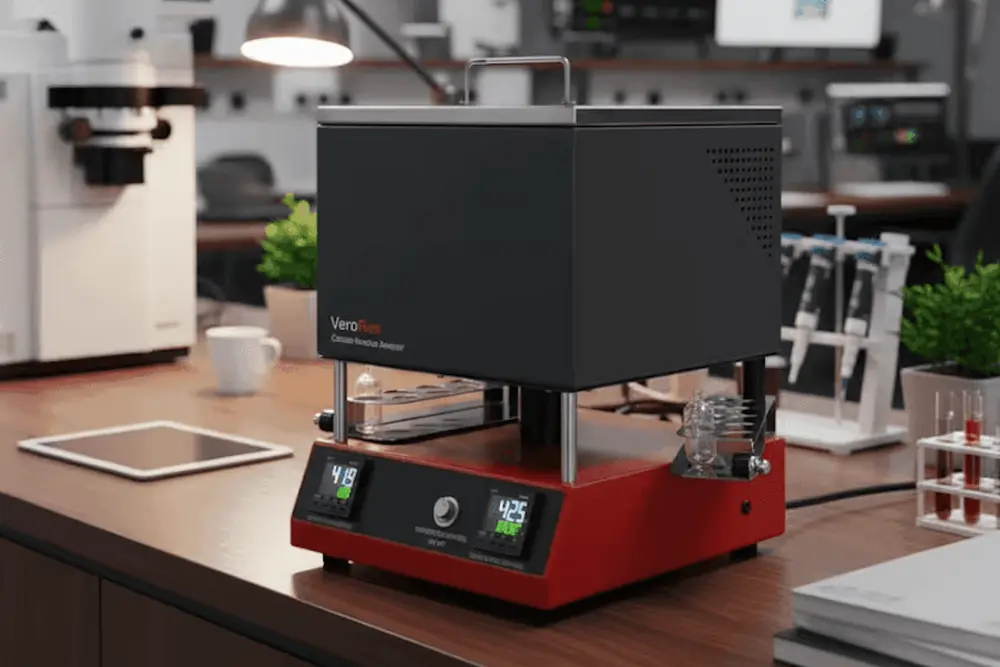
Instrumentation on hand. Many labs run a dedicated carbon residue test apparatus configured for one method or the other, and switching between them isn't always a matter of flipping a setting, it can mean different glassware, different furnace profiles, and different calibration routines entirely.
The Bigger Picture: Carbon Residue Alongside Other Crude Quality Metrics
Carbon residue rarely gets evaluated in isolation. In a full crude oil assay, it sits alongside other contamination and quality metrics that together paint a picture of how a crude will behave through the refining process:
- Basic Sediment and Water (BS&W), measured under ASTM D4007, quantifies suspended solids and water picked up during production, high BS&W creates operational headaches throughout the refinery.
- Salt content, measured under ASTM D3230 and reported in lb NaCl per 1,000 barrels, flags the need for desalting; concentrations above roughly 10 lb/1,000 bbl typically require treatment to avoid corrosion in distillation towers and downstream equipment.
Carbon residue fits into this same category of "how difficult will this feedstock be to handle" data, it's not a performance spec so much as a risk indicator, flagging fouling and catalyst deactivation potential before the crude ever reaches the unit.
Getting Consistent, Defensible Results
Whichever method a specification calls for, the reliability of carbon residue data comes down to the same fundamentals: correctly maintained apparatus, disciplined temperature control, and awareness of what can distort a reading, additives, moisture, or sample handling that doesn't match the method's requirements. For labs running both ASTM D524 and ASTM D189 across a mixed sample slate, keeping the two procedures and their equipment clearly separated isn't just good practice, it's what keeps carbon residue data trustworthy enough to base real refining and quality decisions on.